Featured
Enriching their stories: Former sa国际传媒官网网页入口 Museum director James Moore continues pursuit of art history


Published
Modified
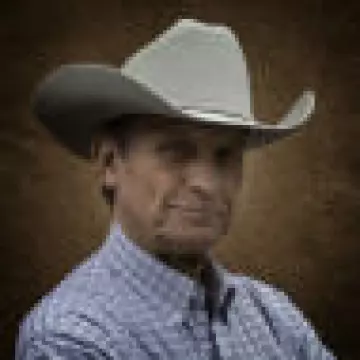
James C. 鈥淛im鈥� Moore retired from his job as director of the sa国际传媒官网网页入口 Museum of Art and History in 2005.
But step into his handsome South Valley house, and you realize immediately that art history is as much a part of his life now as it was during the 26 years he was at the museum.
Enriching their stories: Former sa国际传媒官网网页入口 Museum director James Moore continues pursuit of art history
Paintings, prints, baskets, rugs, pottery and pieces of period furniture decorate the adobe home with the imposing vigas.
Books, some of them written by colleagues in the discipline of understanding the world through art, fill shelves near the residence鈥檚 entrance.
Moore, who turned 83 this month, has a story to go with just about every picture, pot and whiskey cabinet he passes as he leads a guest through the house.
On this day, however, the main topic is 鈥淰ecinos Y Amigos: Bert Geer Phillips and His Neighbors.鈥�
That鈥檚 the title of an exhibit up through February at the Couse-Sharp Historic Site (CSHS) in Taos.
Moore is guest curator of the exhibit, which attempts to identify the people who served as artist Phillips鈥� models for the handful of his paintings in which the Hispanic community is depicted.
鈥淥ne of the goals is to put a face on these people,鈥� Moore said. 鈥淭hey are part of the system.鈥�
Go West, young artist
Bert Geer Phillips, a native of New York state, is said to have been excited during his childhood years by accounts of the exploits of frontiersman Kit Carson and by James Fenimore Cooper鈥檚 鈥淟eatherstocking Tales鈥� of American Indian adventures.
He studied art in New York City and Paris, but in 1898 he set out on his own western adventure with fellow artist Ernest Blumenschein. They settled in Taos, a circumstance considered to be the seed that led to the flowering of Taos Society of Artists (TSA) in 1915. The six founding members, known as the Taos Six, were Phillips, Blumenschein, E. Irving Couse, Joseph Henry Sharp, Oscar E. Berninghaus and W. Herbert Dunton.
鈥淧hillips is unusual among the Taos Society of Artists,鈥� Moore said. 鈥淗e lived (in Taos) the longest, he became the person most connected with (Taos) Pueblo and he had the least academic training.鈥�
In the gallery guide he wrote for the 鈥淰ecinos Y Amigos鈥� exhibit, Moore notes that during their first summer in Taos, Phillips and Blumenschein were visited by Manuel Mondragon and other residents of Taos Pueblo. Phillips and Mondragon became friends, and Mondragon was Phillip鈥檚 first model. That was fortunate.
鈥淯nless you have independent means, artists need to sell paintings,鈥� Moore said. 鈥淵ou have to know what鈥檚 popular. What the people wanted from the Taos artists were Indians.鈥�
Moore said Phillips did not paint Hispanic subjects often because there was not a market for that work.
Those few he did paint are explored in the Taos show.
鈥淥ur exhibition seeks to expand our knowledge of the context of those few paintings of Bert鈥檚 in which people in the Hispanic community modeled, to identify them, and to enrich the artist鈥檚 stories with theirs,鈥� said Davison Koenig, CSHS executive director.
Imaginative tableaux
Phillips did not get off to as good a start with the Hispanic community of Taos as he did with the people of Taos Pueblo. He displayed a bigoted attitude toward his Hispanic neighbors and actually touched off a riot when he refused to remove his hat during a procession celebrating the feast of Our Lady of Guadalupe.
His feelings changed as he studied Spanish and became more acquainted with the Hispanic culture.
Phillips鈥� paintings with Hispanic themes in the CSHS exhibit include 鈥淥ur Washerwoman鈥檚 Family鈥� (1917); 鈥淗is Favorite Santo鈥� or 鈥淭he Santero鈥� (1917); and 鈥淟ady, Please Buy One Chicken鈥�(Moore puts the date at 1937). Facsimiles of 鈥淭hree Musicians of the Baile鈥� (1918) and 鈥淪panish Girl of Taos鈥� (circa 1947) are also on display.
鈥淲e鈥檝e got some of the best work he has done,鈥� Moore said.
With the exception of two of the subjects in 鈥淭hree Musicians of the Baile,鈥� all the models for these works have been identified. One model, Tom谩s Barela, is in three of the paintings. He is the patriarch in 鈥淥ur Washerwoman鈥檚 Family,鈥� the santero in the painting of that title and the fiddler in 鈥淭hree Musicians of the Baile.鈥� Moore said Phillips鈥� laundress was Barela鈥檚 adopted daughter.
The boy depicted in 鈥淟ady, Please Buy One Chicken鈥� has been identified as Elias Casias, who, according to Moore鈥檚 gallery guide, lived on a truck farm in Talpa, about five miles south of Taos.
Moore said two of Casias鈥� children, a son and a daughter, attended the exhibit鈥檚 opening reception on Oct. 11.
鈥淩esearch into the models鈥� families and recognition of who they were allows us a new understanding of Bert鈥檚 working method and greater insight into how paintings were conceived to fit the existing market 鈥� and appeal to the stereotypes held by potential buyers,鈥� Moore said.
With the exception of 鈥淪panish Girl of Taos,鈥� none of the paintings in the CSHS exhibit is a portrait.
鈥淭hey are imaginative tableaux in which people served as actors in stories that Phillips felt would have success in broadening his reputation on the exhibition circuit,鈥� Moore said.
鈥淲ithout the people, there鈥檚 nothing to paint except landscapes.鈥�
Sounds like fate
Moore was director at the sa国际传媒官网网页入口 Museum from 1979 to 2005. He said that since retiring, he has kept active corresponding with colleagues, doing research and publishing papers when he felt he had something to add to the field.
He was born in Topeka, Kansas, in 1941, but moved to sa国际传媒官网网页入口 in 1950. He graduated from Highland High School in 1959 and received a bachelor鈥檚 in art history from the University of New Mexico in 1966. He earned a master鈥檚 and a doctorate in art history from Indiana University.
Moore was coordinator of the art history program at the Toledo (Ohio) Museum of Art and an adjunct associate professor at the University of Toledo when he was hired for the sa国际传媒官网网页入口 Museum job.
Perhaps the most amazing part of Moore鈥檚 personal story is that he graduated from college and discovered a passion for art and its history.
鈥淲hen I was in high school I worked at Piggly Wiggly, stocking shelves and sacking groceries, and at Hiland Bowl, setting pins,鈥� Moore said. 鈥淢y grades suffered. My counselor told me not to even bother applying for college.鈥�
But he did anyway.
鈥淚 was in the Sputnik (satellite launched by the Soviet Union) generation,鈥� Moore said. 鈥淎ll the guys were being channeled into the sciences. I enrolled at UNM and got signed up for all the engineering prerequisites.鈥�
While exploring the campus, however, he found himself in the crafts annex building and met sculpture professor Keith Monroe. While they were talking, Monroe discovered that Moore had signed up for engineering courses even though he did not know what he wanted to do in life.
鈥淗e said, 鈥榃ell, if you don鈥檛 know what you want to do, why don鈥檛 you get into the art department?鈥� 鈥� Moore said. 鈥淗e redid my schedule.鈥�
The rest is history. Art history.


