SOUTHERN NEW MEXICO
Doña Ana County seeks answers on Project Jupiter water use
Directs county manager to investigate statements in news reports

Published
Modified
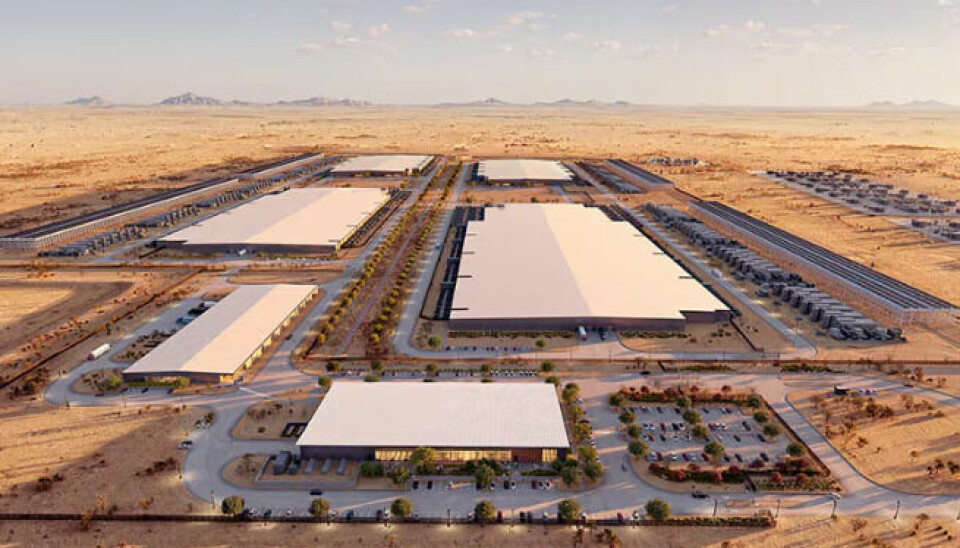
LAS CRUCES — Doña Ana County commissioners approved an unusual resolution Tuesday seeking answers from the builders and tenants of the massive data center complex known as Project Jupiter, currently under construction in Santa Teresa.
The resolution directs County Manager Scott Andrews to verify reports last week that the project would require more water than the developers had previously disclosed, determine any changes to the project and their environmental costs, and make a public presentation of his findings to the commissioners.
In language added during the meeting, two county commissioners would be present at meetings with the developers under the resolution.
The five commissioners have been taking heat over seven months for what critics say was a rushed process to approve $165 billion in industrial revenue bonds and other tax incentives, closing a deal with BorderPlex Digital Assets and Stack Infrastructure to build the project in the county. Commissioner Susana Chaparro, the lone vote against the incentives, has criticized the process and called for greater community engagement.
Local opposition has been steady, with protesters visiting the construction site, addressing the commissioners at every meeting and pushing for a town hall to answer questions about the project’s environmental and community impacts.
The environmental concerns include air emissions from two planned natural gas microgrid power plants that are seeking air quality permits and the amount of water needed for construction, office facilities, a promised closed-loop cooling system and the microgrids.
Last week, the Santa Fe New Mexican published in which the Office of the State Engineer’s general counsel, Nat Chakeres, said the gas power plants alone would require nearly a million gallons a day to operate. The Journal has been unable to verify that estimate independently.
Oracle, which plans to lease the data centers in partnership with OpenAI for training AI models, said in a statement that the center would use nonpotable water from other locations for construction and cooling, but did not directly address Chakeres’ claim in the New Mexican’s story.
“Project Jupiter’s use of community drinking water is limited to an average of 20,000 gallons per day,� Oracle’s statement read. “The water used for construction and cooling systems at the microgrids and data center is unfit for drinking and comes from existing allocated, commercial non-potable sources. Our total usage is essential to support advanced emissions control technology that improves local air quality. The rights holder’s combined water use, inclusive of Project Jupiter’s contracted volumes, remains below historical withdrawal levels. The project reallocates existing water usage, while not increasing demand.�
Under the lease agreement attached to the IRB, daily potable water use would be capped at 60,000 gallons per day and average 20,000 gallons for staff facilities. The developers have purchased nonpotable water from an external source to support construction and the cooling system.
What caught the county’s attention was the possibility of significant nonpotable water use even after construction is complete.
County Attorney Cari Neill said during Tuesday’s meeting the county needed to verify the information quoted in news reports and assess whether the facts were consistent with the IRB agreement. “Quite frankly, we just don’t have enough information,� she said, adding, “We have reason to believe there has been potential misinformation� shared with news organizations.
“There’s a lot of concern that was raised because of comments that were brought in by the media that, as far as we can tell, were not substantiated,� Chairman Manny Sanchez said.
The resolution formally stated a commitment to gather facts and confirm that the developers are complying with their commitment to the county.
If they aren’t, the county’s recourse is not clear. The massive project site appears to be active around the clock. Under the IRB, the county holds title to the project property and leases it to the developers. The deal protects Project Jupiter from property taxes for 30 years in exchange for much lower direct payments to the county, local school districts and other public investments — including $50 million to improve local water systems. Modifying or canceling the agreement would likely result in litigation.

Chaparro welcomed Tuesday’s resolution, recommending the additional language requiring two commissioners to participate. “I think we need to get facts and do our due diligence to truly investigate what is going on, regardless of what’s being posted online or whatever reports are out there,� she said.
County Economic Development Director Denisse Carter said plans were underway for a community meeting with representatives of “the four companies� — BorderPlex, Stack, Oracle and OpenAI — to take place in June. Community advocates had pushed for that meeting to happen sooner, but Carter said more time was required to line up the various representatives.
Algernon ¶Ù’A³¾³¾²¹²õ²õ²¹ is the Journal’s southern New Mexico correspondent. He can be reached at adammassa@abqjournal.com.


