LOCAL COLUMN
OPINION: What does a win look like in Iran
On March 10, Defense Secretary Pete Hegseth said the U.S. would control the timeline during the war with Iran. In Kentucky, President Donald Trump proclaimed, 鈥淲e won 鈥� in the first hour it was over.鈥� Because those who wage war based on firepower infatuation believe might makes right, these predictions strike me as delusional. When Trump more recently ordered ground troops to the Middle East, in my mind, the questions became: 鈥淲hat does 鈥榳in鈥� look like?鈥� and, 鈥淲ho defines 鈥榳in?鈥欌��
Forty-seven years of building a regime around exporting terror and propagandizing to eliminate jews/Israel and 鈥渄eath to America鈥� has resulted in severe crippling of Iran鈥檚 capacity to manufacture and deliver nuclear weapons as well as to sponsor proxy forces. Iranian leadership has been decimated to the point the United States and Israel are challenged to find a credible representative to negotiate with. Trump鈥檚 habit of attacking under the cover of negotiations and then pushing for one-sided deals that humiliate opponents would give a counterparty to negotiations pause, should a legitimate one emerge.
Trump invited the Iranians to seize the opportunity for regime change and to rise up spontaneously. Fortified by an entrenched Revolutionary Guard backstopped by 10 of 90 million citizens, the theocracy that has rallied around Ali Khamenei鈥檚 son, Mojtaba Khamenei, seems secure for now. Their willingness to slaughter any opposition appears to have eliminated possible internal challenges.
A quisling puppet regime on the model of acting President Delcy Rodriguez in Venezuela would seem to have been at least one Trumpian victory vision. In Venezuela, crowds welcomed the U.S. liberating them from former leader Nicholas Maduro. In Iran, energized by continued U.S. and Israeli bombing, demonstrations celebrating the death of Ayatollah Ali Khamenei quickly gave way to even bigger shows of patriotic support for the remaining regime. As in World War II, Britain, Vietnam, Ukraine, Afghanistan and Gaza before them, Iranians appear to prove once again that proud people don鈥檛 break to bombs.
With troops now on the move to the Middle East, the recent promises of no nation building seem hollow today. As unlikely as the U.S. seems willing to sustain this cost now, Trump as president has proven singularly successful in working his way around constraints against his will. Even if he prevails in some form, it is hard to see how this outcome would actually finish the job. Without riveting made-for-TV and cartoon images of explosions, dead people and decimated buildings, he could well lose interest. In the eyes of Iran, continued tie-up by the U.S. is a victory.
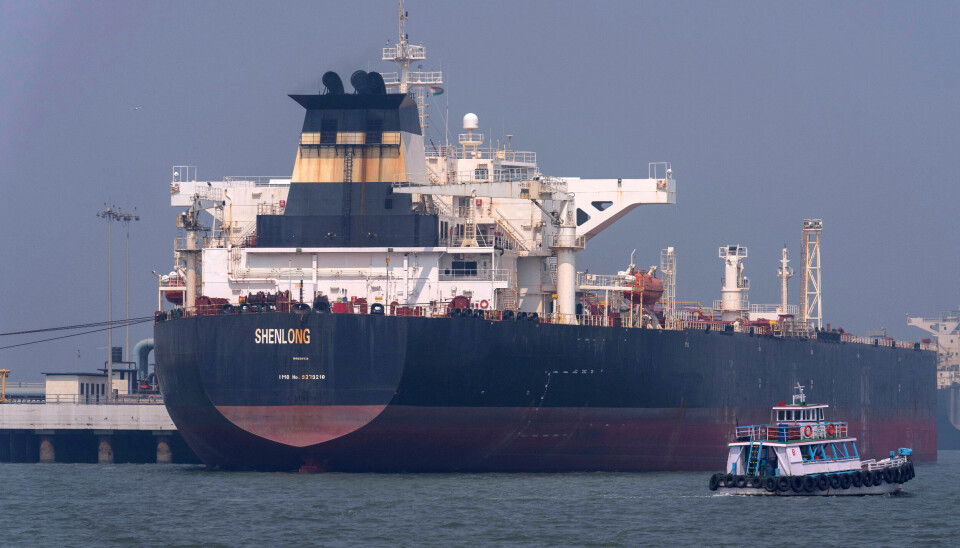
Yet a fourth plausible scenario for a Trump victory declaration is to reopen the Strait of Hormuz either by agreement or by force. What this would actually mean seems fuzzy right now. A negotiated deal with a government capable and willing to enforce ceasing attacks on ships would be preferred. In the absence of an agreement that guarantees mutually acceptable standards of dignity and honor, asymmetric warfare may be conducted through the use of inexpensive drones and rockets launched from mobile platforms such as pickup trucks. These methods become the terms of engagement of choice initiated at the behest of the less powerful confronting stronger adversaries. And then there is Israel. In Gaza, which has been decimated, perpetual warfare is the new norm. Iran鈥檚 nuclear threat was neutralized in the first hour, according to Trump. With their air defenses eliminated, they have no defense to rebuild. What鈥檚 Israel鈥檚 definition of enough?
President Trump has made no secret of his desire for the Nobel Peace Prize. We know that he can wage war against a weak opponent. Can he now make peace?
David Foster is a former education policy analyst, business owner and entrepreneur. He has lived in Saudi Arabia lives in sa国际传媒官网网页入口.


